

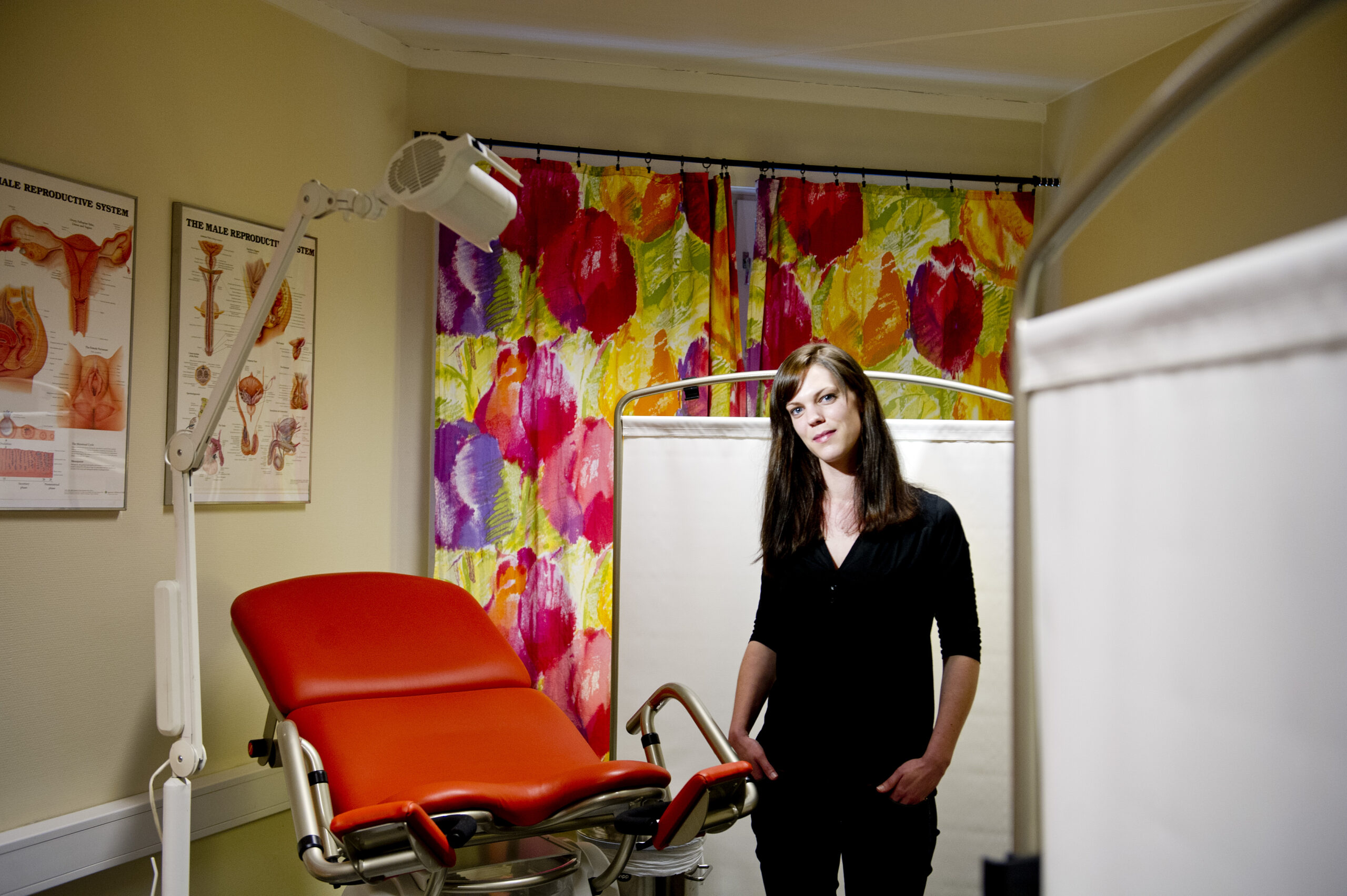
Marte Bratlie and the company she started, RemovAid, shows that even in the development of medtech equipment it is possible to take great strides in a short time.
While she worked with contraceptive related issues, she noted that the use of long-acting contraceptives, like birth control implant, has shown strong growth over the recent years. And based on her experiences, she started questioning the established procedures to remove the implants.
Simplified
The procedure to insert the implant was simplified in 2011 when a new introducer was launched in the market, but as a physician and clinician Bratlie noted the often random process of removing the rods.
– It is an unpredictable and unproductive process, which in some cases can take a long time. So I thought there must be an easier way. And that was the start of the idea, says Marte Bratlie today.
The idea was to develop a device which will simplify the process of removing the contraception rods. Currently, there are no such devices in the market.
Partnership
The prototype is developed together with RemovAid`s product development partner TTP. The contact with TTP was established at a seminar arranged by Oslo Medtech last fall to splice medtech companies and product developers.
– It has been a tough process, where we've spent some time trying to understand each other, not to mention understand the complexity of the project. It may seem easy, but when the product has to accommodate for a range of human variation it gets more complicated.
In September 2012, a partnership of the Clinton Health Access Initiative, the Governments of Norway, the United Kingdom, the U.S. and Sweden, The Children's Investment Fund Foundation, other groups and the German pharmaceutical firm Bayer AG, announced an initiative to expand access to long-acting contraceptive for 27 million woman and girls in low-income countries.
When starting RemovAid, Marte Bratlie broke out from a "safe" life as a doctor and put her Ph. D-studies on hold.
– The year which has passed has provided a steep learning curve. I hope and believe that we have managed to steer clear of any major pitfalls. Ultimately you have to rely on your gut feeling, says Bratlie.